 Mazda chiptuning in Brasov
Mazda chiptuning. The engine is a 165 HP unit, the limits are in the software.
The Skyactiv-G 120 HP and the e-Skyactiv-G 122 HP M Hybrid use the same PE-VPS 2.0 block as the 165 HP version. Stage 1 removes the limits from the ECU, with no parts changed, and is measured on our dyno before and after. More than 300 Mazda Skyactiv-G cars have been through the workshop since 2017.
- The first company in Romania with Stage 1 on the Skyactiv-G, since 2017
- Power and torque measured on the dyno, not estimated
- M Hybrid coordinated with the new calibration, checked afterwards
- Original software saved; go back to stock for free through the diagnostic port
Updated · catalogue from 19 October 2026
17 yearsof chiptuning, since 2009
101Mazda engines in the catalogue
426reviews, rated 5.0
The figures for your Mazda
Choose the model, generation and engine. See Stage 1 power and torque, average values measured on the dyno, and the final price.
Mazda 3 2.0 Skyactiv-G M Hybrid 122 HP
What Stage 1 brings on popular Mazda engines
The order comes from real searches in the configurator. The figures are average values measured on the dyno, for the most searched version of each engine.
| Engine | Example | Stock | Stage 1 | Stage 1 price |
|---|---|---|---|---|
| PE-VPS M Hybrid2.0 petrol mild hybrid, 122 HP | Mazda 3 2.0 Skyactiv-G M Hybrid 122 HP 2019 - 2024 |
122 HP · 213 Nm | 165 HP · 225 Nm+43 HP | 1,799 RON |
| PE-VPS2.0 petrol, 120 HP (Gen 3) | Mazda 3 2.0 Skyactiv-G 120 HP 2016 - 2019 |
120 HP · 210 Nm | 175 HP · 220 Nm+55 HP | 1,599 RON |
| e-Skyactiv-X2.0 petrol SPCCI, 186 HP | Mazda 3 2.0 e-Skyactiv X 186 HP 2019 - 2024 |
186 HP · 240 Nm | 206 HP · 250 Nm+20 HP | 1,599 RON |
| Skyactiv-D 2.22.2 diesel, 184 HP | Mazda 6 2.2 Skyactiv-D 184 HP 2018 - prezent |
184 HP · 445 Nm | 210 HP · 480 Nm+26 HP | 1,799 RON |
| Skyactiv-G 2.52.5 petrol, 194 HP | Mazda 6 2.5 Skyactiv-G 194 HP 2018 - prezent |
194 HP · 258 Nm | 210 HP · 275 Nm+16 HP | 1,599 RON |
| PE-VPS2.0 petrol, 165 HP (Gen 3) | Mazda 3 2.0 Skyactiv-G 165 HP 2013 - 2016 |
165 HP · 210 Nm | 175 HP · 220 Nm+10 HP | 1,599 RON |
Mazda chiptuning by model
Choose the model and see every engine in the configurator, with Stage 1 figures measured on the dyno and the final price.
Skyactiv-G 120 HP: the 165 HP engine, limited in software
The PE-VPS 2.0 engine in the 120 HP version is mechanically identical to the one in the 165 HP version: same displacement, same construction, same internal components. Mazda differentiated the two versions purely through software, with a set of electronic limits in the ECU. Stage 1 removes these limits and recalibrates every map, without any hardware work.
It applies to the Mazda 3 BM/BN, Mazda 6 GJ/GL, CX-3, CX-5 KE/KF and MX-5 ND with the 120 HP 2.0 Skyactiv-G engine. The Stage 1 price is 1,599 RON, with the dyno measurement before and after included. The exact figures for your car are in the configurator.
Four limits working at the same time
The restriction is not a single one. Mazda put in several software limits that work at the same time:
- Electronic throttle restriction: the throttle is partly closed by the software at around 4,400-4,600 rpm and cuts power early.
- Artificial load and torque limits: the ECU limits engine load below its real capacity and restricts torque in the mid and upper ranges.
- Reduced rev limit: the limiter is at around 6,200 rpm, well below the mechanical potential.
- Conservative ignition and injection maps: ignition advance and air-fuel ratios are below optimum, with excessive safety margins.
With the ECU remap we remove all these limits and recalibrate every map for performance, with the original hardware.
What the dyno shows on a stock car
On the dyno, the 120 HP version produces more flywheel power than Mazda states, every time. Our repeated measurements show values between 130 and 140 HP, in some cases even above 145 HP, depending on the ECU variant (Denso or Mitsubishi) and the year of manufacture. The factory limits do not fully hold back the engine's potential, and the real mechanical margin is well above the commercial specification.
AMC Motorsport was the first company in Romania to offer Stage 1 for the Mazda Skyactiv-G, since 2017. Since then, more than 300 Skyactiv-G 120 HP cars have been through the workshop, each one measured individually on the dyno.
Results measured on the dyno
Three real runs on a Mazda Skyactiv-G 120 HP. Each chart compares stock power and torque with Stage 1, measured on the same Bapro dyno in Brasov. Number plates are hidden.


Stage 1 figures
| Stock | Stage 1 | |
|---|---|---|
| Power | 120 HP (88 kW) | 175 HP on average, range 165-180 HP |
| Torque | 210 Nm | 220 Nm on average, range 215-225 Nm |
| Hardware | original | original, 95-98 octane petrol |
| Price | 1,599 RON, with dyno before and after |
The range of results reflects real differences between cars, not imprecise measurement. Four things decide the final figure: the ECU variant (Denso usually allows a more aggressive calibration than Mitsubishi), the fuel (on a direct-injection engine with 14:1 compression, the octane rating decides how far we can go with ignition advance; 98 octane petrol resists knock better), the gearbox (ratios and losses differ between manual and automatic, and so do the values at the wheels) and the factory parameters plus wear (different batches and markets, and a well-maintained car responds differently from one with advanced wear).
Technical specifications: Skyactiv-G 2.0 120 HP (Gen 3, BM/BN)
| Parameter | Value |
|---|---|
| Engine code | PE-VPS |
| Displacement | 1,998 cc, inline 4-cylinder |
| Compression ratio | 14.0:1 (EU), 13.0:1 (US) |
| Maximum power | 88 kW / 120 HP at 6,000 rpm |
| Maximum torque | 210 Nm at 4,000 rpm |
| Bore x stroke | 83.5 x 91.2 mm |
| Valvetrain | DOHC, chain, VVT on both camshafts |
| Injection | direct (GDI), 200 bar |
| Block | all-aluminium |
| Exhaust | integrated 4-2-1 manifold |
| Emissions | Euro 6 |
| ECU | Denso or Mitsubishi, depending on year and market |
| Models | Mazda 3 BM/BN, Mazda 6, CX-3, CX-5, MX-5 ND |
| Mazda 3 Gen 3 production years | 2013-2019 |
e-Skyactiv-G 122 HP: the same block, one more layer, M Hybrid
The fourth-generation Mazda Skyactiv-G, with the 24 V M Hybrid system, uses the same PE-VPS 2.0 block, but with a set of software restrictions on several levels: the torque model, the throttle, ignition advance and the mild hybrid strategy. The AMC Motorsport software handles each map separately and coordinates the combustion engine with the ISG.
It applies to the Mazda 3 BP (2019+), Mazda CX-30 and CX-5 Gen 2 facelift with the 122 HP 2.0 e-Skyactiv-G. The Stage 1 price is 1,799 RON, with the dyno measurement before and after included. The exact figures for your car are in the configurator.
Hardware practically identical to the 150 HP version, the difference is mostly software
The difference between the 122 HP and the 150 HP versions is mostly software, without being one hundred percent identical. The hardware base is practically the same: 2.0 direct-injection engine, high compression (around 13:1), Denso or Mitsubishi ECU, mild hybrid system. There are no major mechanical differences (pistons, camshafts, cylinder head), and the stated torque is very close (around 213 Nm). That is why the platform responds well to a remap.
The software restrictions: a complex set, not a single limit
Unlike a simple throttle restriction, on the 122 HP version Mazda applies several limits at the same time:
- Torque limit (the torque model): torque demand is cut mainly between 2,500 and 4,500 rpm and in the higher gears. The engine can produce more, but the ECU does not allow it.
- Throttle limit: on the 122 HP the opening is slower and more limited; on the 150 HP the map is more aggressive. How it feels in practice: the 122 is "lazy", the 150 "breathes better".
- Ignition advance limit: the 122 HP has conservative advance, the 150 HP has advance optimised for power. With the 122, Mazda prioritises safety and emissions.
- Load and airflow limit: the ECU limits the requested air mass, which indirectly reduces power. It is not a mechanical restriction on the intake, it is purely software.
- Usable rev range limit: above 4,000 rpm the 122 HP version "dies" earlier, while the 150 HP keeps pulling.
- Mild hybrid strategy and fuel consumption: the 150 HP version manages load more efficiently and activates the efficiency strategies through the ISG more often.
With the ECU remap we handle each of these maps: we remove the torque limits, recalibrate ignition advance, optimise throttle opening, recalculate airflow and coordinate everything with the M Hybrid system.
What M Hybrid adds to the calibration
The 24 V M Hybrid system adds a layer of complexity. The ISG (Integrated Starter Generator) does more than start the engine and recover energy: it provides extra torque when pulling away and under gentle acceleration, and the ECU manages the combustion engine and the ISG at the same time.
- ISG replaces the conventional alternator and starter motor. It recovers energy under deceleration, stores it in the 24 V Li-ion battery (600 kJ) and assists the engine when starting and accelerating.
- Smoother gear changes: the ECU adjusts engine speed through the ISG during gear changes, for smoother behaviour with the manual gearbox.
- Coordination during calibration: the ISG torque maps must be matched to the new combustion calibration, otherwise the mild hybrid assistance at low load can be affected. An experienced calibrator integrates both systems.
AMC Motorsport has been calibrating the e-Skyactiv-G since 2023. The experience on Gen 3 (120 HP), more than 300 cars, was the basis for our approach to the Gen 4 M Hybrid system. Every project is measured individually on the dyno.
Note: anti-tuning protection on chassis numbers above 400,000
Mazda has introduced a new protection on cars with a production number above 400,000. On these cars, reading and writing the ECU is blocked: no OBD or bench method available today gets past it.
We are working on a solution, but because of the technical complexity we do not have a timeframe. If you have a Mazda 3 Gen 4 from this range, write to us: we will let you know when a measured solution becomes available.
How to check the chassis number: the VIN is on the driver's door sill, on the windscreen (bottom left corner) or in the car's documents. Characters 10-17 of the VIN are the production number.
Results measured on the dyno
Three real runs on a Mazda e-Skyactiv-G 122 HP. Each chart compares stock power and torque with Stage 1, measured on the same Bapro dyno in Brasov. Number plates are hidden.


Stage 1 figures
| Stock | Stage 1 | |
|---|---|---|
| Power | 122 HP (90 kW) | 165 HP on average, range 145-165 HP |
| Torque | 213 Nm | 225 Nm on average, range 220-233 Nm |
| Hardware | original, ISG active | original, 95-98 octane petrol, M Hybrid checked after calibration |
| Price | 1,799 RON, with dyno before and after |
The complexity of the M Hybrid system affects the range of results. Four things decide the final figure: ISG integration (the calibration must take into account the interaction between the combustion engine and the ISG, especially for low-load torque, where the ISG contributes actively; a calibrator without M Hybrid experience can disable or unbalance the electric assistance), the ECU variant (Denso or Mitsubishi, with different parameters; the code is on the ECU label: Mitsubishi starts with PAH9 or PAJ8, Denso with PAJ1 or PAJ9), the fuel (the 13.0:1 compression ratio, compared with 14.0:1 on Gen 3, gives a slightly larger margin, but the recommendation remains 95 minimum, 98 optimal) and the maturity of the platform (the fourth generation is more recent, OBD access for calibration is still maturing, and results differ by year of manufacture and ECU software version).
Every project is measured on the dyno. The stock and Stage 1 comparison chart, with the real flywheel values, remains the final document of every job. The M Hybrid system is functionally checked after calibration.
Technical specifications: e-Skyactiv-G 2.0 122 HP (Gen 4, BP)
| Parameter | Value |
|---|---|
| Trade name | e-Skyactiv-G 2.0 / Skyactiv-G 2.0 M Hybrid |
| Displacement | 1,998 cc, inline 4-cylinder |
| Compression ratio | 13.0:1 (slightly lower than Gen 3 EU) |
| Maximum combustion engine power | 90 kW / 122 HP at 6,000 rpm |
| Maximum torque | 213 Nm at 4,000 rpm |
| Mild hybrid system | Mazda M Hybrid, 24 V belt-driven ISG |
| Mild hybrid battery | Li-ion 24 V / 600 kJ |
| ISG function | energy recovery under deceleration, assistance when starting and accelerating |
| Valvetrain | DOHC, VVT, chain |
| Injection | direct (GDI) |
| ECU | Denso or Mitsubishi, depending on year |
| WLTP fuel consumption (manual) | 5.5 l/100 km (compared with 6.0 on the pre-2021 Skyactiv-G 122) |
| Models | Mazda 3 BP, Mazda CX-30, CX-5 Gen 2 facelift |
| Mazda 3 Gen 4 production years | 2019-present |
Five steps, two dyno runs
- Initial diagnostics. Full ECU scan: we check that there are no active or stored faults before any work; on M Hybrid, also the condition of the system and of the 24 V battery.
- Dyno run in stock configuration. We measure the real power and torque at the flywheel. The chart becomes the baseline.
- Saving the original software. We read and keep the original ECU file. Returning to the OEM software is quick and free through the diagnostic port.
- Writing the calibrated software. We load the calibration via OBD. The factory limits are gone and the maps are recalibrated; on the e-Skyactiv-G, the ISG is coordinated with the new calibration.
- Dyno run after calibration. We measure the real gain and check how the engine behaves (and how M Hybrid works, where applicable). The stock and Stage 1 chart confirms the result.
On average, the remap takes around 1.5 hours, with the two dyno runs, the initial diagnostics and the software writing.
What to watch for on a Mazda
What every Skyactiv-G owner should know before and after tuning. We check these during diagnostics and tell you openly what we found.
Two ECU types, different parameters
On both generations the engine comes with a Denso or Mitsubishi ECU, depending on year and market, with different factory parameters. Denso usually allows a more aggressive calibration. On Gen 4, the code is on the ECU label: Mitsubishi starts with PAH9 or PAJ8, Denso with PAJ1 or PAJ9.
Anti-tuning protection on newer cars (Gen 4)
On the Mazda 3 Gen 4 with a production number above 400,000 (characters 10-17 of the VIN), reading and writing the ECU is blocked by a new protection; no OBD or bench method available today gets past it. We are working on a solution, with no timeframe.
The octane rating decides the ignition advance
Direct injection and 14:1 compression on Gen 3 (13:1 on Gen 4): pressures and temperatures in the combustion chamber are high, and a higher octane rating resists knock better and allows more ignition advance. 95 minimum, 98 optimal.
The ISG must be coordinated with the new calibration
On the e-Skyactiv-G, the ECU manages the combustion engine and the ISG at the same time. The ISG torque maps must be matched to the new combustion calibration, otherwise the electric assistance at low load can become unbalanced. After calibration we functionally check the M Hybrid system: start-stop, energy recovery, assistance when pulling away.
The dyno and the workshop in Brasov
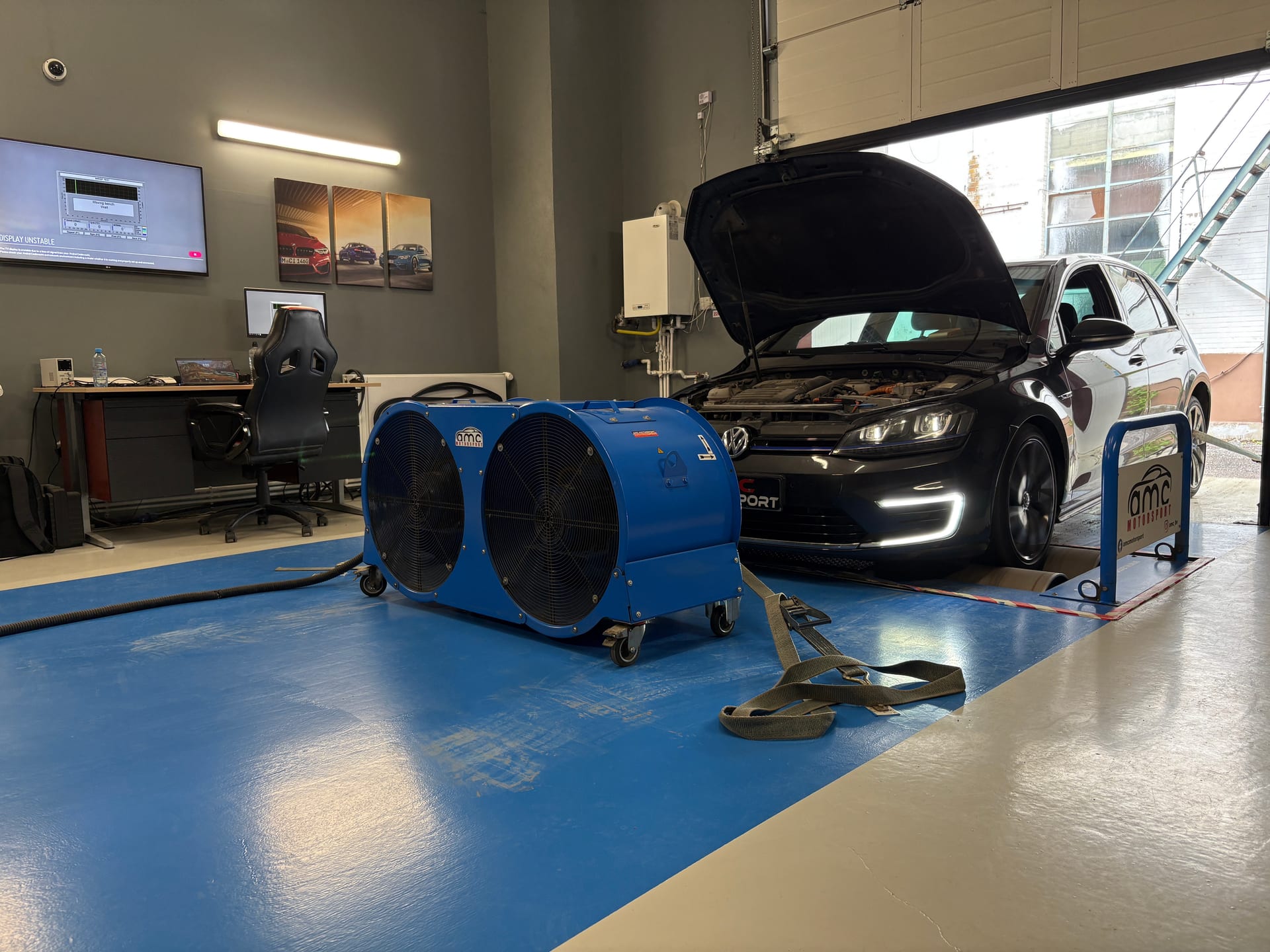
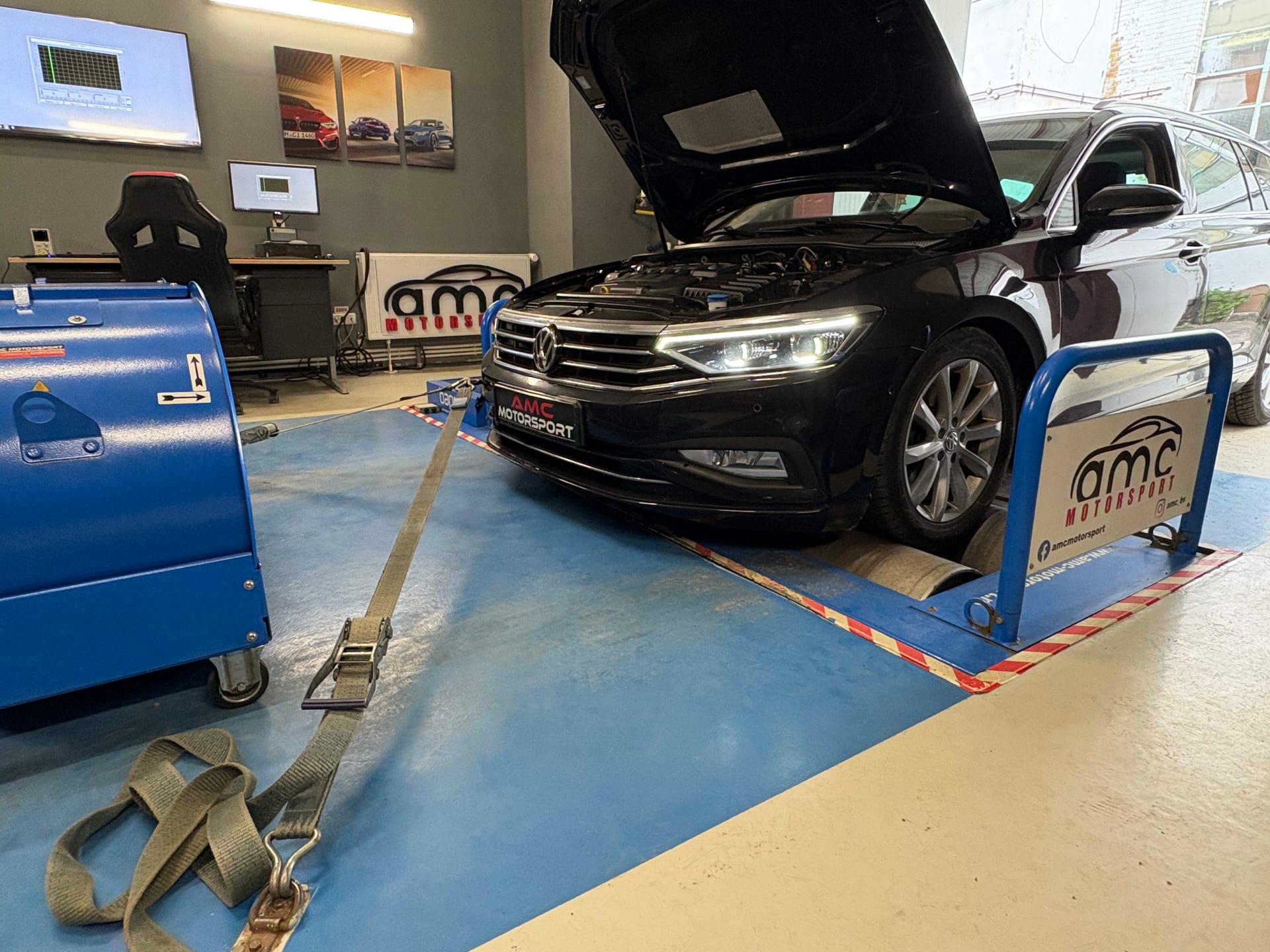
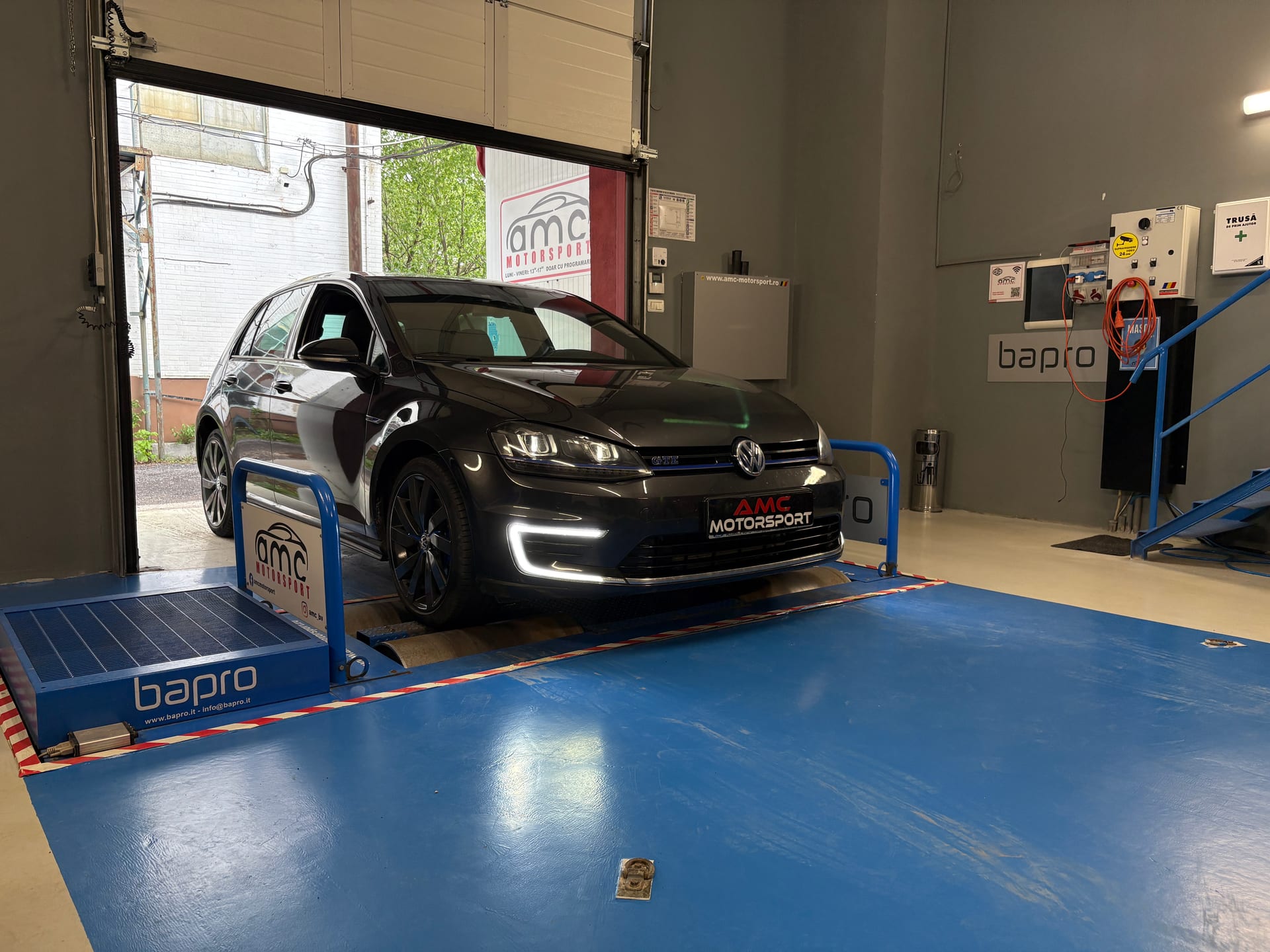
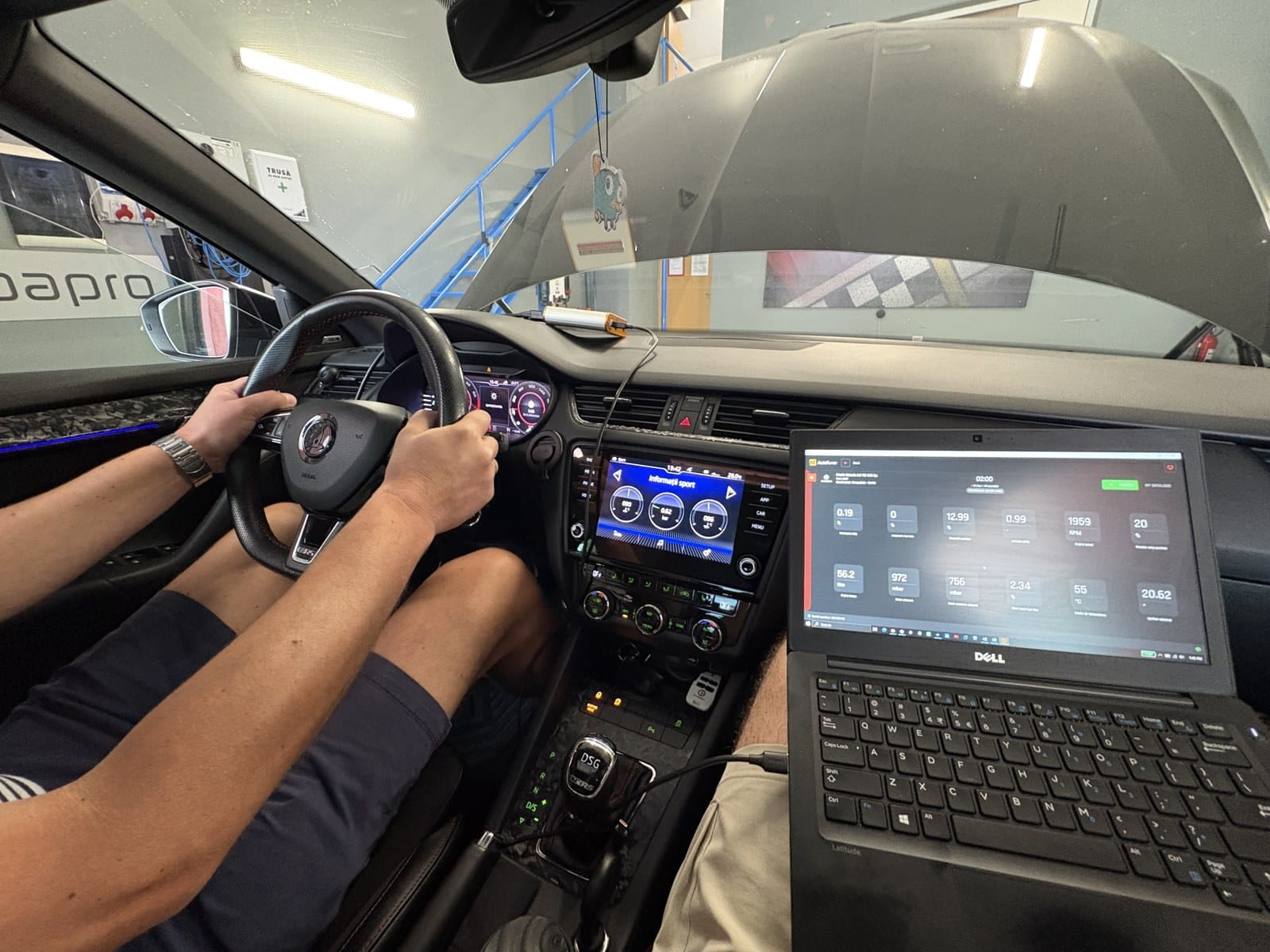
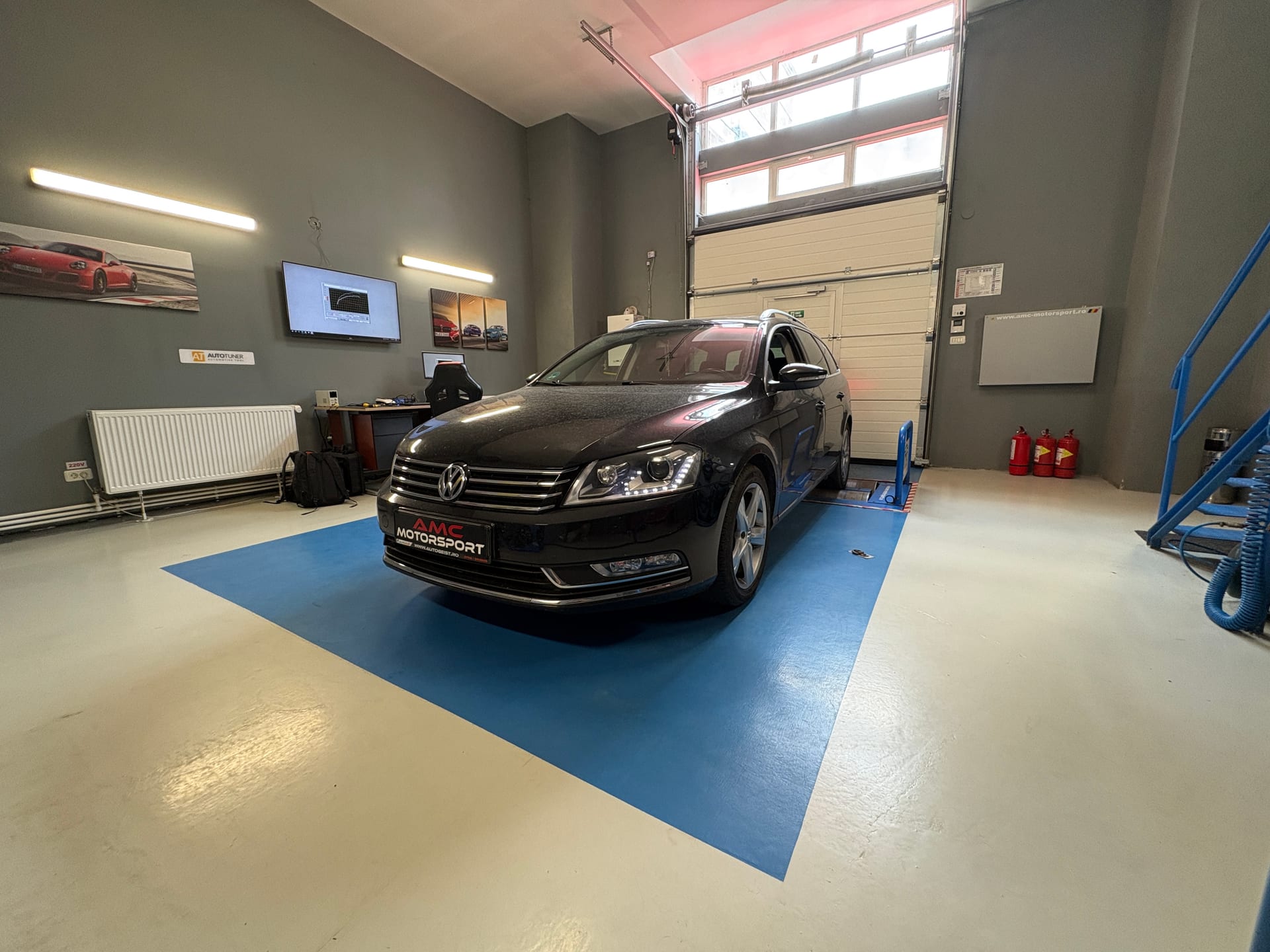
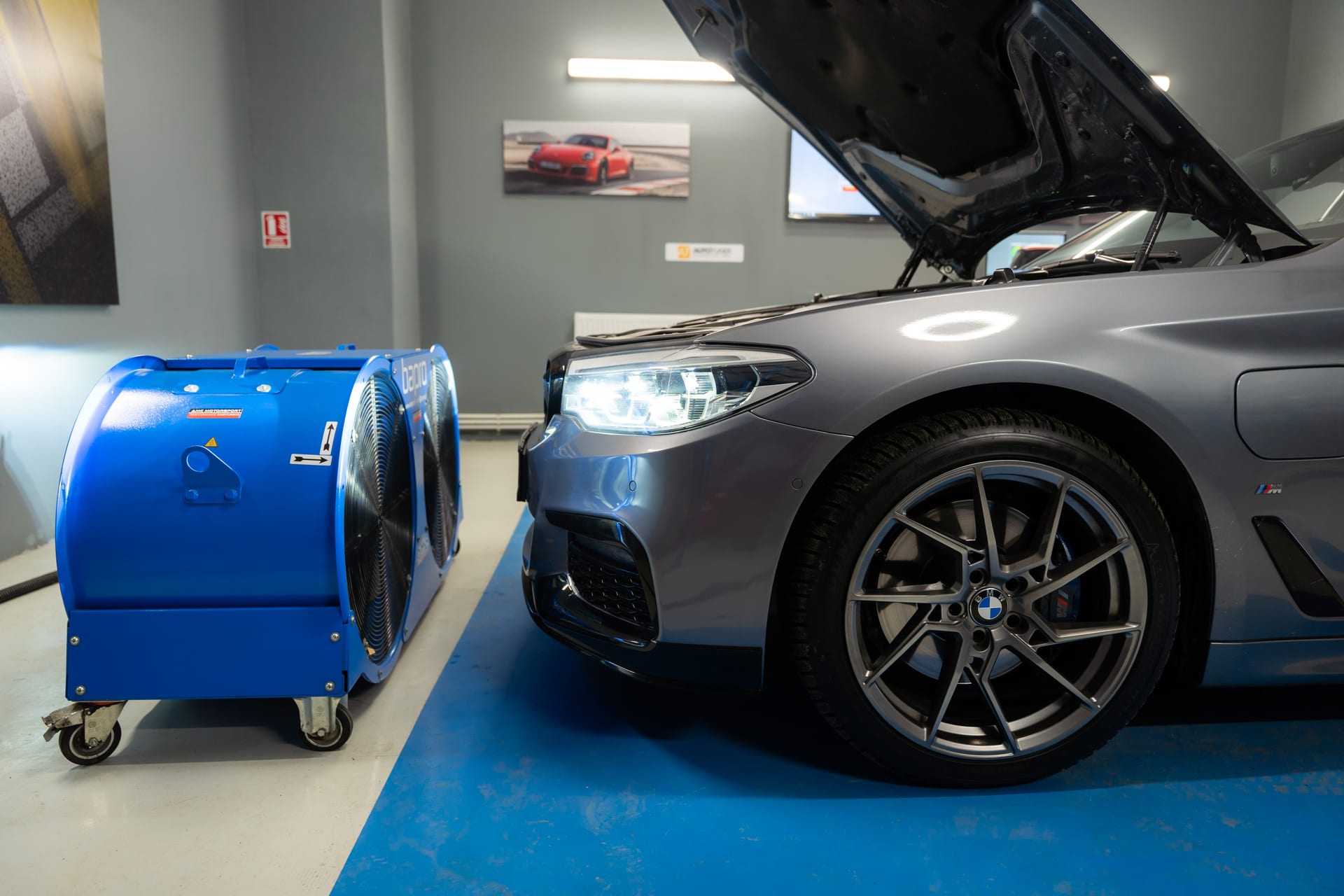
Str. Carpatilor 60. The Bapro dyno and the area where we calibrate every car.
Mazda chiptuning in short
Does the Skyactiv-G 120 HP really have a 165 HP engine?
Yes. The PE-VPS 2.0 engine is mechanically identical to the one in the 165 HP version; the difference is purely in the software (throttle, load, torque, revs, ignition). On the dyno, a stock 120 HP produces 130-140 HP every time, sometimes over 145, and after Stage 1, 175 HP on average.
Why are the results on the e-Skyactiv-G 122 lower than on the 120 HP (Gen 3)?
Gen 4 adds complexity through M Hybrid: the ECU manages the combustion engine and the ISG at the same time, and access to the ISG maps is essential. The platform is more recent and the calibration tools are still evolving; as access matures, the potential grows. The average is 165 HP, range 145-165.
Does the M Hybrid system keep working after the remap?
Yes. The ISG management maps are matched to the new combustion calibration, so assistance when pulling away and accelerating, energy recovery under deceleration and the start-stop function stay active. We check them after writing.
How much does a Mazda remap cost and how long does it take?
Stage 1 costs 1,599 RON on the Skyactiv-G 120 HP and 1,799 RON on the e-Skyactiv-G 122 HP M Hybrid, with the dyno measurement before and after included. It takes about 1.5-2 hours, with the dyno runs, diagnostics and software writing. For the other Mazda engines, the figures and price are in the configurator.
Is the remap reversible?
Yes, completely. We save the original software before any work. Returning to stock takes a few minutes and costs nothing; on M Hybrid, the system returns to its original parameters.
What fuel should I use after the remap?
95 minimum, 98 optimal. On a direct-injection engine with 14:1 compression (13:1 on Gen 4), a higher octane rating resists knock better and allows more ignition advance, so more power.
Does fuel consumption go up after the remap?
No. The engine works more efficiently once the limits are removed, and you need less throttle for the same performance. Sporty driving increases fuel consumption, but that is also true of a stock car.
Why do results differ between cars?
The ECU variant (Denso or Mitsubishi), the fuel and its octane rating, the gearbox type (manual or automatic), the year of manufacture with parameters that differ between batches, and the general condition of the engine. That is why we measure every car on the dyno, before and after.
My car's chassis number is above 400,000. Can it be done?
Not yet. On these Gen 4 cars, reading and writing the ECU is blocked by a new protection. Leave us your number through the contact form and we will let you know when we have a measured solution.
Can I also get Stage 1 on the Skyactiv-G 165 HP, the Skyactiv-X or a diesel?
Yes. The measured figures and price for every Mazda engine are in the configurator: choose the model, generation and engine and see the average gain on the dyno.